Sustainability focuses on long-term growth, as it reduces risks by strengthening credibility in a competitive market. It enables organisations to use their resources in a more responsible way and minimise waste.
Customers and businesses have become more aware and conscious of their choices. As a result, sustainable businesses are more attractive to customers, investors, and partners who value ethical and environmentally responsible operations. Sustainable practices help companies comply with regulations and avoid penalties.
The International Organisation for Standardisation (ISO) has published hundreds of certifications that provide a comprehensive framework for businesses to manage environmental, social, and operational responsibilities.
Why Sustainability Needs a Systematic Approach?
Sustainability is a buzzword for companies, and every organisation aims to demonstrate its compliance with sustainability practices, but only a few implement them effectively.
However, organisations face challenges in maintaining consistency without proper documentation systems. Understanding ISO Certification requirements can be overwhelming for organisations on their own. Thus, choosing the right ISO Consultancy can simplify the ISO Certification and documentation process.
ISO standards provide a structured approach for businesses to plan, implement, monitor, and continually improve their sustainable practices. They help them reduce waste, conserve energy, protect resources, and operate responsibly while maintaining efficiency and profitability.
How ISO Certification Supports Sustainable Practices?
ISO Certification helps organisations integrate sustainability into their core business strategy. It encourages responsible decision-making while ensuring efficient use of resources.
ISO Certification helps in the following ways to ensure sustainable practices:
- Promotes efficient resource utilisation
- Reduces environmental footprint
- Encourages waste reduction and recycling
- Improves energy management practices
- Ensures compliance with environmental laws
- Strengthens risk management
- Builds credibility in global markets
Important ISO Certifications for Sustainable Practices
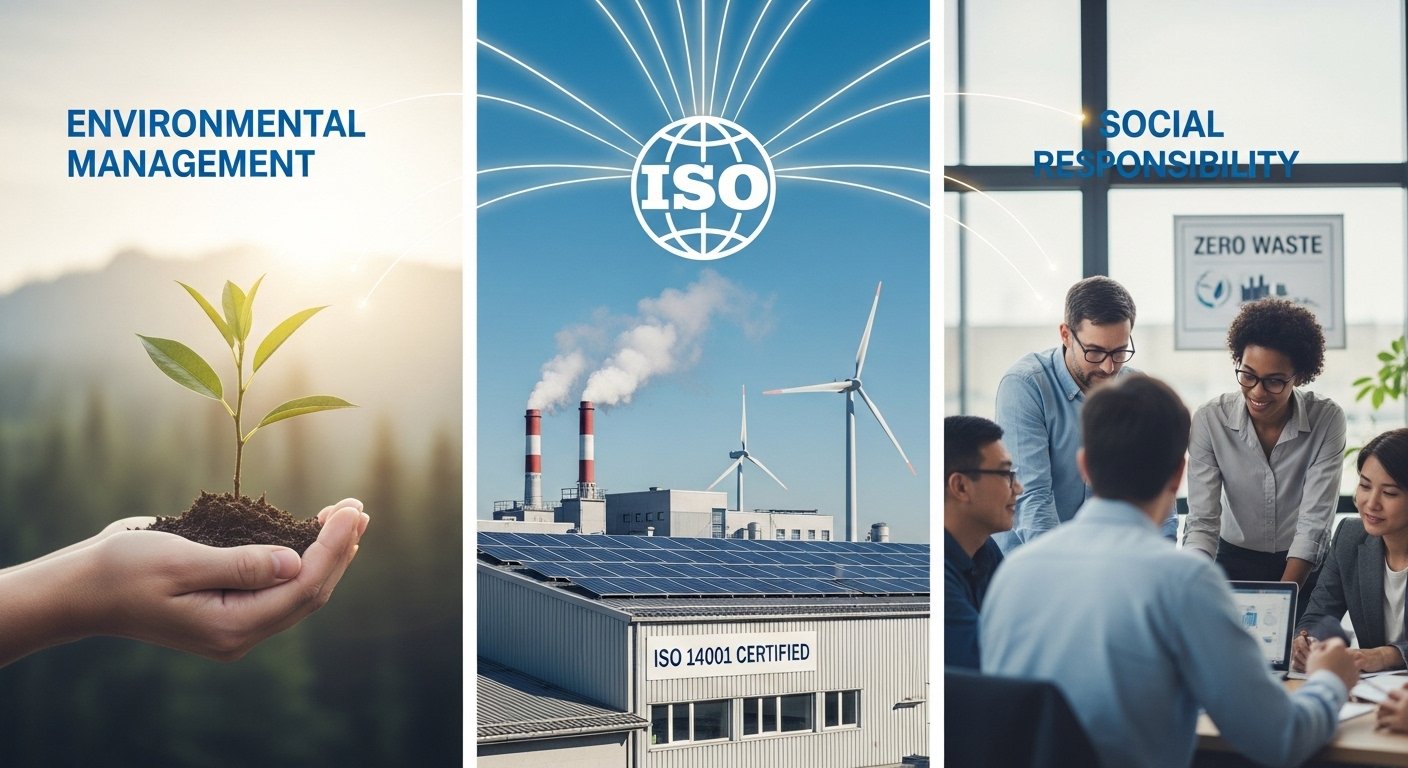
Several ISO standards directly support the United Nations’ Sustainable Development Goals (SDGs). Each standard focuses on a specific area that contributes to responsible and efficient business operations.
ISO 14001 Certification – Environmental Management System (EMS)
ISO 14001 helps organisations identify environmental risks and take steps to control their impact on the environment. It supports sustainability in the following ways:
- Reduces pollution and waste generation
- Encourages efficient use of resources
- Helps comply with environmental regulations
- Promotes eco-friendly processes and practices
ISO 50001 Certification – Energy Management System (EnMS)
Energy consumption is a significant contributor to environmental damage; therefore, ISO 50001 focuses on enhancing energy efficiency and reducing energy-related costs. It helps organisations in the following ways:
- Helps monitor and control energy usage
- Encourages the use of energy-efficient technologies
- Reduces greenhouse gas emissions
- Lowers operational expenses
ISO 45001 Certification – Occupational Health and Safety Management System (OHSMS)
Sustainability includes social responsibility and employee well-being, while ISO 45001 ensures safe and healthy working conditions. ISO 45001 supports sustainability in the following ways:
- Reduces workplace accidents and injuries
- Promotes employee welfare
- Improves productivity and morale
- Strengthens organisational responsibility
ISO 9001 Certification – Quality Management System (QMS)
Businesses often feel that quality and sustainability are unrelated. However, consistent quality reduces rework, waste, and resource misuse. Thus, it supports sustainability:
- Minimises defects and production waste
- Encourages efficient process management
- Improves customer satisfaction
- Promotes long-term operational stability
ISO 26000 Certification – Social Responsibility Guidance
The ISO 26000 standard focuses on ethical business practices and social responsibility. Although it is not a certifiable standard, it provides valuable guidance for responsible operations. It supports sustainability in the following ways:
- Encourages ethical decision-making
- Promotes fair labour practices
- Supports community development
- Strengthens corporate accountability
Conclusion
Companies worldwide want to partner with organisations that comply with sustainable business practices. ISO certifications reflect an organisation’s commitment to globally accepted business management practices.
Businesses that ignore sustainability often lag behind in the competitive market. On the other hand, those that adopt ISO standards position themselves as reliable and forward-thinking.
Sustainable practices help businesses align with the United Nations’ Sustainable Development Goals (SDGs) and support long-term success.