
Bahrain’s economy is growing steadily across all sectors. While the kingdom is known as the financial hub of the Gulf, the oil & gas sector still plays a significant role. As these industries expand, the demand for ISO certifications in Bahrain is increasing, especially in the Oil & Gas and petrochemical sectors.
The major component of Bahrain’s economy comes from the industrial sector, and Bahrain’s business landscape is experiencing rapid expansion across all sectors, including oil & gas and the petrochemical domain. Bahrain is an important industrial hub in the Middle East, where oil & gas, petrochemical, and aluminum industries have a strong presence. Due to the massive growth, the companies have to match global standards and adopt structured management systems.
Clients of international repute require organizations in Bahrain to maintain high quality, safety, and compliance standards; they expect these organizations to be certified by an accredited ISO certification body for the relevant standard, as per the International Organization for Standardization (ISO).
The need to adopt structured management systems is further boosting the need for the ISO industry in the Bahraini compliance market.
Adopting ISO standards in complex industries such as oil & gas and petrochemicals requires more than meeting compliance requirements; it seeks a systematic approach. The organizations must evaluate risks, maintain clear documentation and align their management systems with international compliance requirements. ISO consulting firms in Bahrain assist businesses by conducting gap assessments, developing documentation frameworks, and guiding implementation across various departments. With expert guidance, companies can strengthen operational control, build strong operational structures, and improve regulatory alignment to prepare confidently for certification assessments.
Industrial Growth in Bahrain and the Need for Structured Systems
The industries in Bahrain are expanding rapidly, leading to increased competition. Standardized processes lead to operational efficiency and a reduction in compliance risks. The energy and petrochemical sectors in Bahrain are experiencing a continuous expansion. The increase in scale is leading to increased expectations from international investors and clients. Owing to the same, organizations are focusing on executing process control, documentation, and risk management.
Industries operating in complex sectors such as energy and petrochemicals manage operations under strict regulations and often face challenges when implementing structured management systems without expert support. ISO consultants help organizations in building practical frameworks that integrate quality, environmental, and occupational safety into everyday operations. Through activities such as risk assessments, mapped processes, and internal audits that facilitate employee training, consulting teams enable companies to make stronger operational controls with clear accountability. As a result, organizations maintain regulatory compliance, which improves efficiency, risk management, and builds long-term business resilience.
What is the Role of ISO Certifications in Bahrain
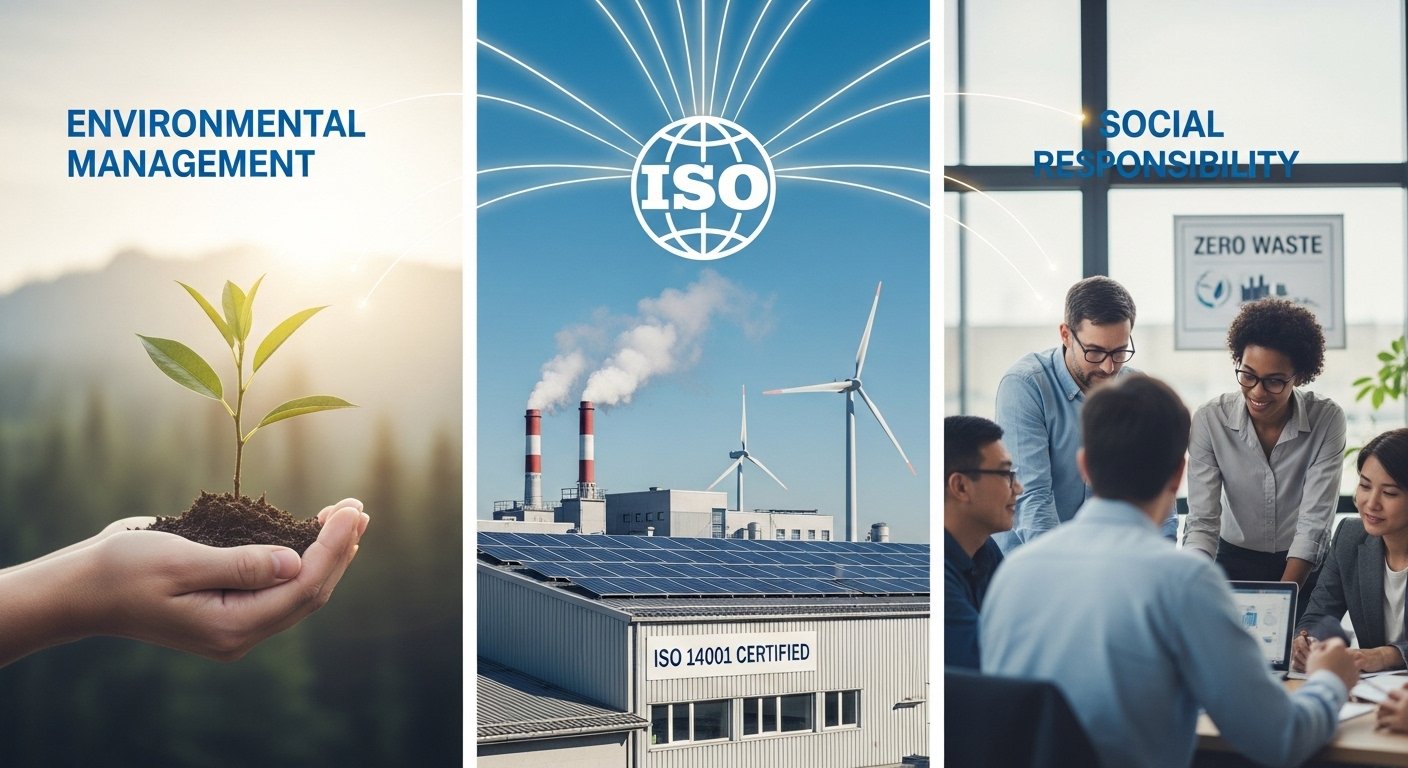
ISO standards provide a global framework to companies that helps them systematically manage their operations. ISO certifications improve both product and service quality by improving it. For instance, ISO 9001 Quality Management System certification in Bahrain enables improvement and maintenance of products and services in the oil and gas domain, ranging from the green energy sector to petrochemical manufacturing. ISO 14001 Environmental Management System certification in Bahrain helps reduce the impact on the environment, while ISO 45001 Occupational Health and Safety Management system certification in Bahrain helps manage workplace safety and improve employee protection from hazardous working conditions. ISO 27001, Information Security Management System, helps companies prevent their data from cybersecurity risks.
These standards streamline complex operations together and build one unified management system.
Implementation of multiple ISO standards across clear industrial operations may require careful coordination and structured planning. Companies must align internal processes, documentation systems, and risk management frameworks across multiple departments. ISO consulting firms help companies in Bahrain by conducting gap assessments, developing structured documentation, and helping integrate different ISO standards in a single management system. With the right consulting support, businesses strengthen governance while also ensuring smooth alignment with international compliance, embedded into daily operations rather than treated as standalone compliance requirements.
Key Benefits of ISO Certifications
Improved Operational Efficiency
ISO frameworks provide process standardization and better documentation to companies, which reduces operational errors while helping improve the overall productivity of the organizations.
Better Regulatory Compliance
Industries such as Oil & Gas and petrochemicals often have strict regulatory requirements, and ISO standards help these industries meet requirements. These standards set by ISO (International Organization for Standardization) help companies align with industry norms.
Workplace Safety and Risk Reduction
Standards such as ISO 45001 help companies identify workplace hazards while improving the safety culture. This reduces the risk of injuries and occupational health issues by timely identification and mitigation with the help of laid-out processes.
Global Business Credibility
With an increase in industries across Bahrain, the country is witnessing a scale-up in investment from foreign investors and clients. Achievement of ISO standards signifies trust, credibility, and transparency to these international stakeholders, further opening up global opportunities in the oil and gas sector, which requires them to get ISO certified in Bahrain.
Which Industries in Bahrain are Benefiting from ISO Certifications
Aluminium Manufacturing
In the aluminium production sector, manufacturing processes involve multiple stages with complex processes such as raw material handling, smelting, refining, and final product quality control. If the processes are not structured, production errors and material wastage increase. ISO standards like ISO 9001 (Quality Management System) support aluminum manufacturing companies in systematic management of manufacturing processes. In this, clear process control and defined responsibilities, along with a quality monitoring mechanism is established. It helps organizations produce consistent quality products while maintaining the required production efficiency and increasing customer satisfaction.
Oil & Gas Industry
The oil & gas sector requires high operational safety, and ISO standards such as ISO 45001 enable companies to improve process control. ISO 45001 Occupational Health and Safety Management System helps organizations implement and follow laid-out processes and controls to ensure a safe and secure workplace and environment for employees across all organizational levels.
Petrochemical companies
The bar for environmental compliance and the stakes of risk management are high in petrochemical sector organizations. ISO standards such as ISO 14001:2015 help them minimize the adverse impacts of their operations on the environment.
IT and cybersecurity companies
ISO standards play a key role in IT, Fintech, and cybersecurity companies, helping them with data protection, identification, and mitigation of cybersecurity risks across IT firms and cybersecurity companies in Bahrain.
For industries such as aluminium manufacturing, oil & gas, petrochemicals, and IT services, organizations often face challenges due to scale and strict compliance needs. Implementation of ISO standards across such environments requires careful gap assessment, documentation coordination, process alignment, and preparation for certification audits. Many organizations, therefore, depend on ISO consulting companies to help them identify the gaps, while ensuring that ISO standards are properly embedded into daily operations to meet regulatory and compliance expectations.
Future Outlook for ISO Certifications in Bahrain
Several emerging trends are accelerating ISO adoption across Bahrain’s industrial sectors.
|
Trend Driver |
Sector Impact (Oil & Gas / Petrochemicals) |
Key ISO Standards |
Projected Adoption Rise |
|
Vision 2030 Localization |
Supply chain resilience, local content mandates |
ISO 9001, ISO 29001 |
+25% by 2027 |
|
ESG & Emissions Reporting |
Carbon tracking, investor ESG demands |
ISO 14001, ISO 50001 |
+30% |
|
Cyber / OT Security Risks |
Refinery digitization vulnerabilities |
ISO 27001 |
+40% with AI growth |
|
Safety in High-Risk Ops |
Offshore/onshore hazard mitigation |
ISO 45001 |
Steady 21% firm growth |
The current compliance scenario in Bahrain suggests that the demand for ISO certifications in the country will increase significantly. Moreover, a rapid digital transformation driven by the evolution of AI, ML, and LLM, an increase in cybersecurity risks with the expanding digital economy, and a focus on environmental sustainability are evident in the rise of increased ESG reporting requirements and global trade regulations. These factors motivate the companies to adopt international standards.
The industrial ecosystem in Bahrain is rapidly growing, and ISO certifications are helping companies to achieve structured management systems, regulatory alignment, and operational excellence. Adopting international standards is vital to long-term business credibility and sustainable growth of industries across all regions of Bahrain.
As industries continue to expand, organizations often work with professional ISO consulting firms that play an important role in enabling organizations to implement international standards effectively. MSCi provides ISO consulting services through gap assessments, documentation development, management system implementation, employee training, and audit readiness. With structured consulting support, organizations can integrate ISO standards into their operations and strengthen their credibility in both regional and global markets.